

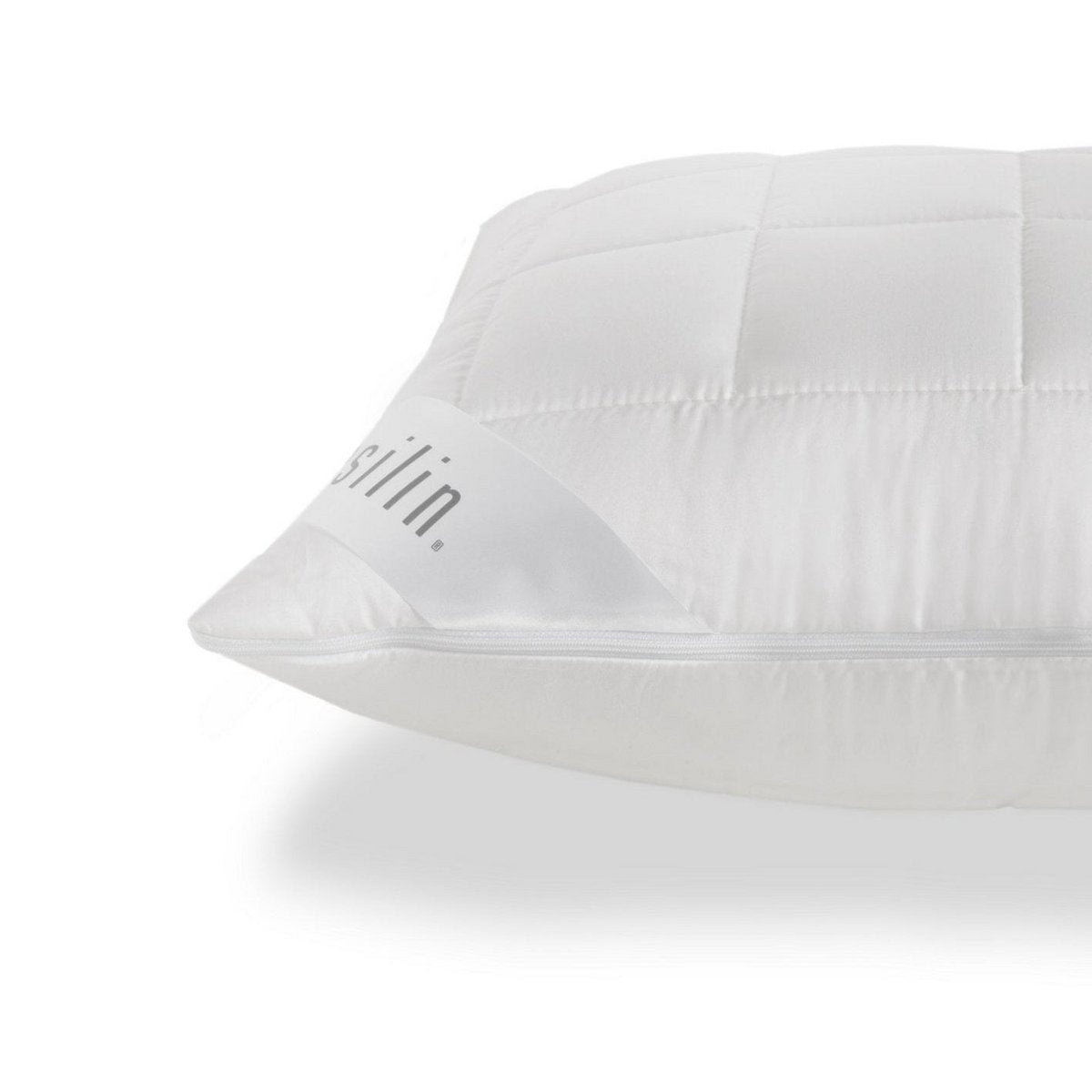
A pillow is more than an accessory – its filling determines sleep comfort, support, and how often you can wash it. Down, feathers, and microfiber feel different, respond differently to heat, and require different care. Anyone choosing between the three fillings should know what's behind them: What exactly is down made of, why are feather pillows firmer, and when does microfiber make sense as an alternative? This guide compares the three most common pillow fillings by support, weight, care requirements, and lifespan – as a decision aid for your next pillow purchase.
When buying a pillow, most people first look at size and cover fabric. Yet the filling determines how the pillow will actually feel and perform over years of use. Depending on how they're processed, down, feathers, and microfiber suit different sleep types and needs.
Down, feathers, or microfiber: what matters in a filling
Three factors are decisive when comparing: support, meaning how much resistance the pillow offers the head, the weight of the whole pillow, and the care the filling can tolerate. A light, soft pillow feels luxurious but offers little support. A firmer pillow supports the neck more reliably but usually weighs more.
Down pillows: soft, light, and moldable
Down consists of the fine, quill-less plumes from the breast feathers of geese or ducks. Its cluster structure traps air, giving an excellent warmth-to-weight ratio with minimal weight of its own. Pure down pillows feel soft and yielding but offer little support – for this reason they're often blended with a small proportion of feathers, around 90 percent down to 10 percent feathers, to give the pillow a bit more structure. To keep the filling from migrating through the fabric, down pillows need a tightly woven, so-called down-proof cover.
Feather pillows: more support for the classic choice
Unlike down, feathers have a firm quill. This gives noticeably more resistance and support, but also makes the pillow heavier. Pure feather pillows have become rarer today – blends of down and feathers are more common, where the feather content provides shape and stability while the down provides softness on the surface. Anyone looking for a firmer natural-fiber pillow without giving up the soft feel of down entirely will find a compromise in such blends.
Microfiber pillows: easy care and allergy-friendly
Microfiber is a synthetic filling made of fine polyester fibers designed to mimic the softness of down without containing any animal material. Because it contains no organic components, microfiber pillows are considered relatively unproblematic for people sensitive to feathers or dust. A practical advantage: microfiber fillings can typically be machine washed at 60 degrees, which reliably kills dust mites. The downside shows over time – the fibers lose their loft faster than down, so microfiber pillows need to be replaced more often than high-quality natural-fiber pillows.
Which filling suits which sleep type?
Side sleepers need a firmer, higher pillow that fills the gap between shoulder and head – feathers, a down-feather blend, or a more densely processed microfiber filling work well here. Back sleepers usually do fine with medium support, such as that offered by a balanced down-feather blend. Stomach sleepers benefit from a flat, soft pillow that doesn't bend the cervical spine too sharply – pure down or a thin microfiber filling is often the more comfortable choice here.
Care and lifespan compared
Down and feather pillows generally tolerate only gentle washing at low temperatures, often on a wool or delicate cycle, and must be dried thoroughly afterward to prevent mold from forming in the filling. Fluffing the pillow daily helps maintain its loft for longer. With good care, high-quality down pillows last several years. Microfiber pillows are simpler to wash: they tolerate higher temperatures and dry faster in everyday use – a trade-off for the shorter lifespan already inherent in the filling itself.
Pillow Filling Compared
| Property | Down | Feathers | Microfiber |
|---|---|---|---|
| Support | Soft, little support | Firmer, more support | Medium, depending on processing |
| Weight | Very light | Heavier | Light |
| Heat retention | High heat retention | Good heat retention | Lower heat retention |
| Care | Mostly hand wash/delicate cycle, low temperature | Similar to down, delicate | Machine washable up to 60°C |
| For allergy sufferers | Conditionally suitable, depending on cleaning | Conditionally suitable | Usually well suited, as synthetic |
| Lifespan with good care | Several years | Several years | Shorter, often 1–2 years |
Why Maison de Cocon
- In the Duvets & Pillows collection, you'll find pillows with down, feather, and microfiber filling in the standard sizes 80x80 cm and 40x80 cm.
- The covers on most pillow models are removable, so the shell and filling can be cared for separately.
- You can choose between different firmness levels and pick the filling that matches your preferred sleep position.
- The product descriptions state the material composition and care instructions, so you can check washability before buying.

Leave a comment
All comments are moderated before being published.
This site is protected by hCaptcha and the hCaptcha Privacy Policy and Terms of Service apply.