

A pillow that's perfect for back sleepers can leave side sleepers with a stiff neck the next morning – and vice versa. The reason lies in the gap between head, shoulder, and mattress, which changes with every sleep position. Waking up with neck pain is often a sign that your pillow simply doesn't match how you sleep. This guide explains which pillow height and filling suit side, back, and stomach sleepers, what to look for if you already have neck pain, and which materials – from down to natural hair to latex – work best for each need.
Why sleep position determines the right pillow
At night, your cervical spine needs the same support it gets while standing during the day: a straight line, without kinks or bends. Depending on whether you sleep on your side, back, or stomach, the gap between your head and the mattress changes – and so does the height a pillow needs to fill. A pillow that sits perfectly for back sleepers often leaves side sleepers with too little volume under the head, letting the spine bend sideways.
Side sleepers: the gap between shoulder and ear matters most
Side sleepers need more pillow height than in any other position. The width of the shoulder pushes the upper body sideways, creating a larger gap between ear and mattress that needs to be filled completely so the head doesn't tilt downward. Pillows that are too flat let the cervical spine sink sideways; pillows that are too high push it in the opposite direction.
Shape-retaining fillings work particularly well here because they don't collapse over the course of the night. Natural hair such as horsehair or camel hair, as well as pillows with a latex core, hold their height even under the weight of the head. Down pillows with a high feather content also work, but should be firmly filled rather than soft and plush.
Back sleepers: support rather than padding
Lying on your back, the head sits closer to the mattress than in a side position. A pillow that's too high pushes the chin toward the chest and overstretches the neck muscles from behind; one that's too flat lets the head tip backward. What's needed is a medium height that supports the natural curve of the cervical spine without altering it.
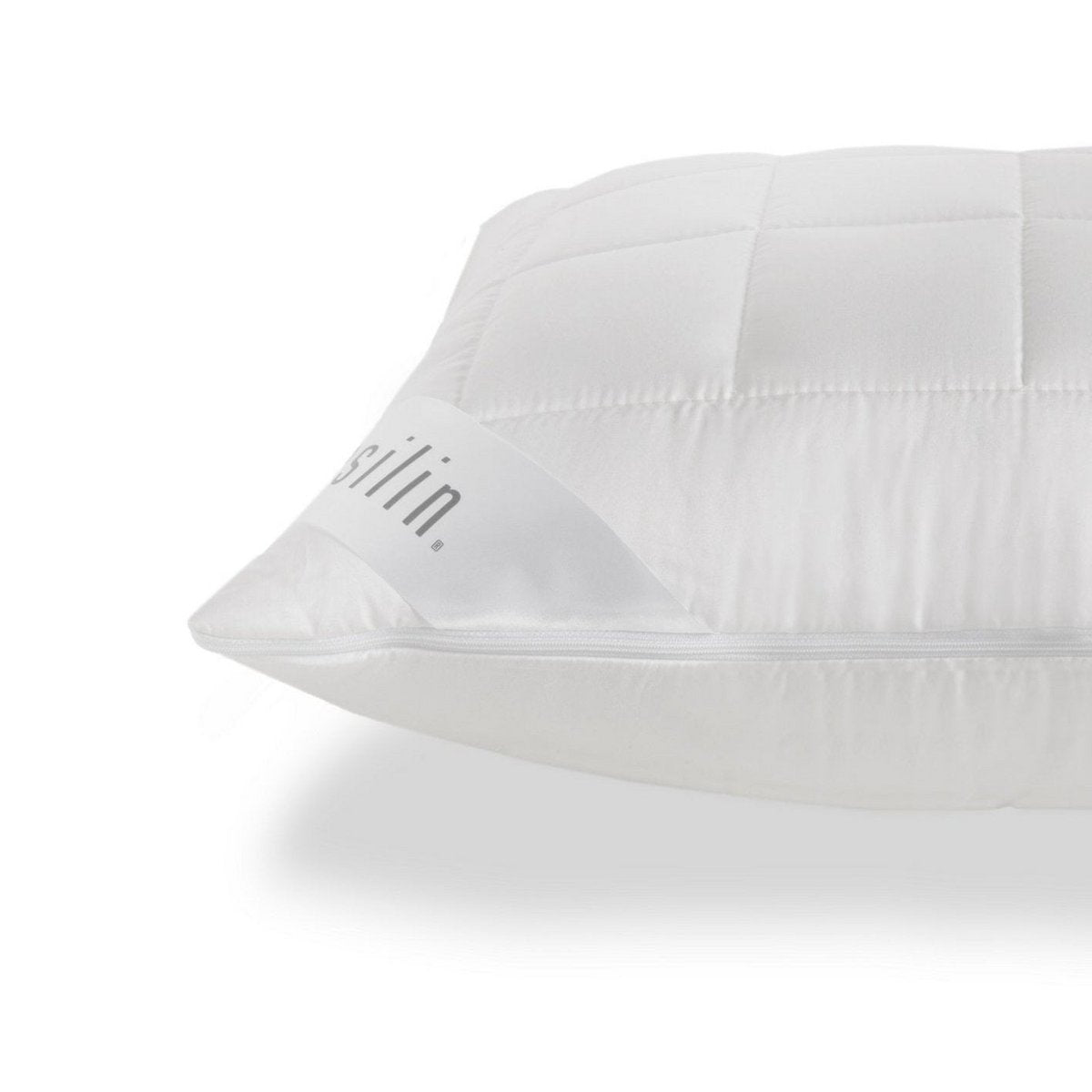
A down-and-feather blend is often the most practical choice for back sleepers: the feathers provide stability, while the down offers soft adaptation to head and neck. Pillows with a baffle-box construction – where the filling is stitched into individual chambers – also prevent the material from bunching up in one spot and creating uneven height.
Stomach sleepers: less height protects the neck
When sleeping on your stomach, the head is already turned to one side – any extra pillow height intensifies this twist in the cervical spine. A very flat, soft pillow, or in some cases no pillow at all, relieves the neck the most. Anyone who doesn't want to sleep without a pillow entirely should choose loose down or light feather fillings that compress noticeably under the weight of the head.
An additional, flat pillow under the pelvis can also relieve lower back strain for stomach sleepers – a detail often overlooked in discussions about the right pillow height.
Frequent position changes: a compromise between height and adaptability
Many people don't stay in one position all night but switch between lying on their back and their side. For this group, a pillow with medium to firm support is more practical than a highly specialized model optimized for just one position. Pillows with adjustable fill, for example with a zip that allows individual filling layers to be removed, can be adjusted to a preferred height later on, without needing to buy a new pillow.
Neck pain: when the pillow is the cause
Not every neck pain comes from the pillow, but a poorly chosen pillow is one of the most common – and most easily fixed – triggers. A typical sign: tension that's strongest right after waking up in the morning and eases over the course of the day. This suggests the cervical spine spent hours in an unfavorable position instead of recovering overnight.
If you already have neck issues, it's worth looking at shape-retaining, individually adjustable fillings. Latex pillows and pillows with a foam core hold their contour for hours without shifting the way down pillows can over the course of the night.
Material and filling: what matches your sleep position
Beyond height, the filling determines how well a pillow holds its shape and how it feels:
- Down and feathers: soft, cozy, temperature-regulating – good for back and stomach sleepers, and suitable for side sleepers too when the feather content is high.
- Natural hair (horsehair, camel hair): shape-retaining, moisture-regulating, on the firmer side – often the choice for side sleepers and those with neck problems.
- Latex: elastic, resistant to dust mites, keeps its contour for years – suitable for all sleep positions, especially for sensitive necks.
- Synthetic fillings (hollow fiber): washable at up to 60 degrees, lightweight, usually slightly softer in support – a low-maintenance option for any position.
Construction also plays a role. A baffle-box design keeps the filling evenly distributed and prevents down or feathers from bunching up in one corner. For natural materials, it's also worth checking the certification, such as OEKO-TEX Standard 100, which tests the textiles used for harmful substances.
Pillow choice by sleep position at a glance
| Sleep position | Pillow height | Firmness | Suitable filling |
|---|---|---|---|
| Side sleepers | high | firm, shape-retaining | Natural hair, latex, firmly filled down |
| Back sleepers | medium | medium-firm | Down-feather blend, baffle-box construction |
| Stomach sleepers | flat or no pillow | soft | Loose down, light feather filling |
| With neck pain | individually adjustable | medium to firm, shape-retaining | Latex, natural hair, pillows with adjustable filling |
Why Maison de Cocon
- Our Duvets & Pillows collection includes pillows with different fillings – from down to natural hair to latex – for various sleep positions.
- Baffle-box construction in our down pillows keeps the filling evenly distributed instead of letting it bunch up in one corner.
- Pillows with removable filling layers can be adjusted in height later on, without needing to buy a new one.
- Our customer service team can help you choose the right pillow height for your sleep position and shoulder width.
Duvets & Pillows · our guide to choosing the right duvet by warmth type

Leave a comment
All comments are moderated before being published.
This site is protected by hCaptcha and the hCaptcha Privacy Policy and Terms of Service apply.