

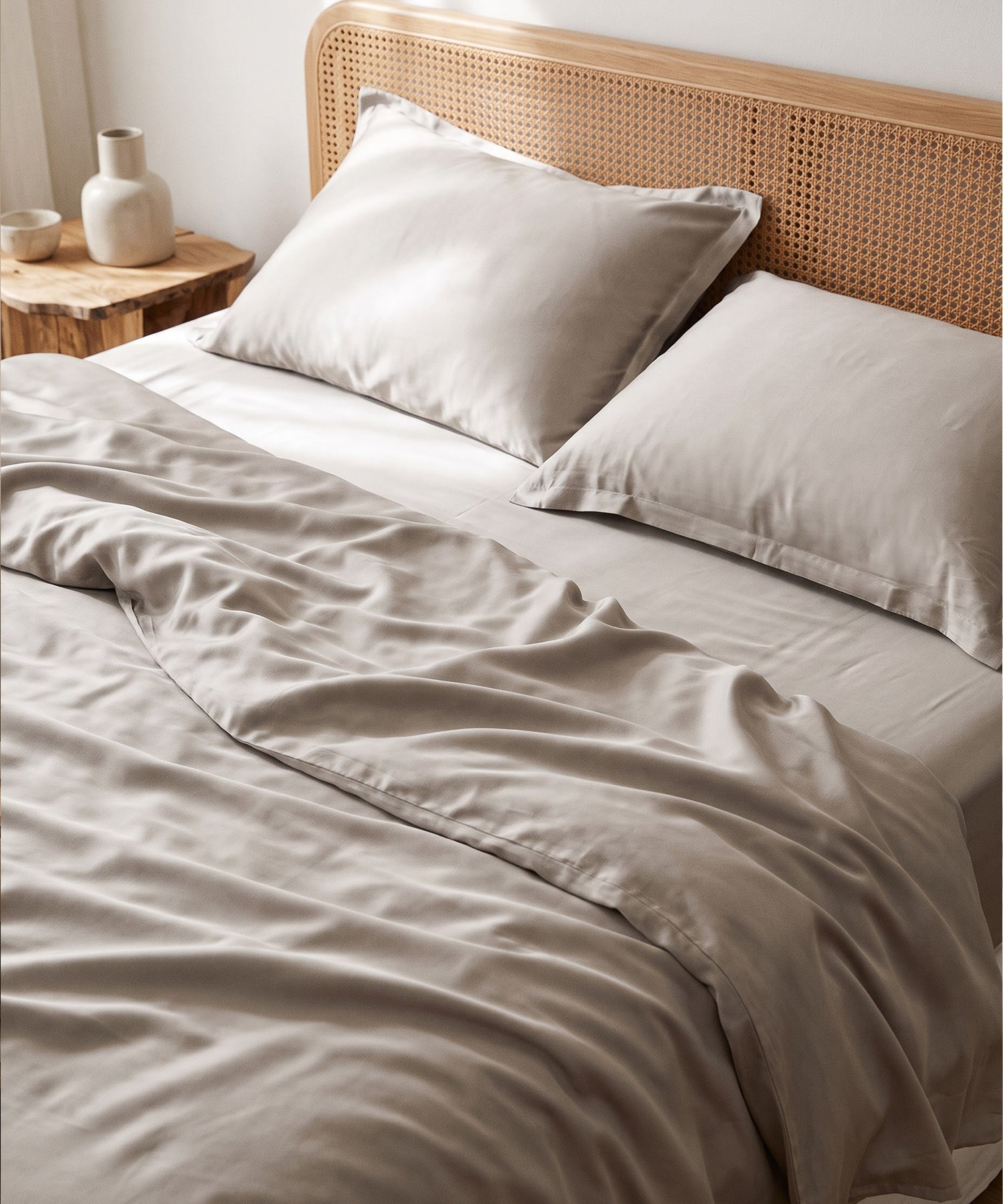
Linen bedding is a classic choice for warm nights and cool bedrooms – but not everything sold as "linen" lives up to the name. Weight, weave and finishing determine whether a duvet cover still feels pleasant after ten washes or turns into coarse sackcloth. This guide explains which figures actually matter when buying, what European bed sizes look like, and how to care for linen bedding so it keeps its quality for years.
What makes linen a distinctive bedding material
Linen is made from the fibres of the flax plant. The fibre is naturally tear-resistant, absorbs moisture well and releases it quickly again – which is why linen bedding feels dry even on warm nights. Unlike cotton fibres, linen fibres are stiffer and less uniform in thickness, giving the fabric its characteristic, slightly shimmering surface and typical matte handle.
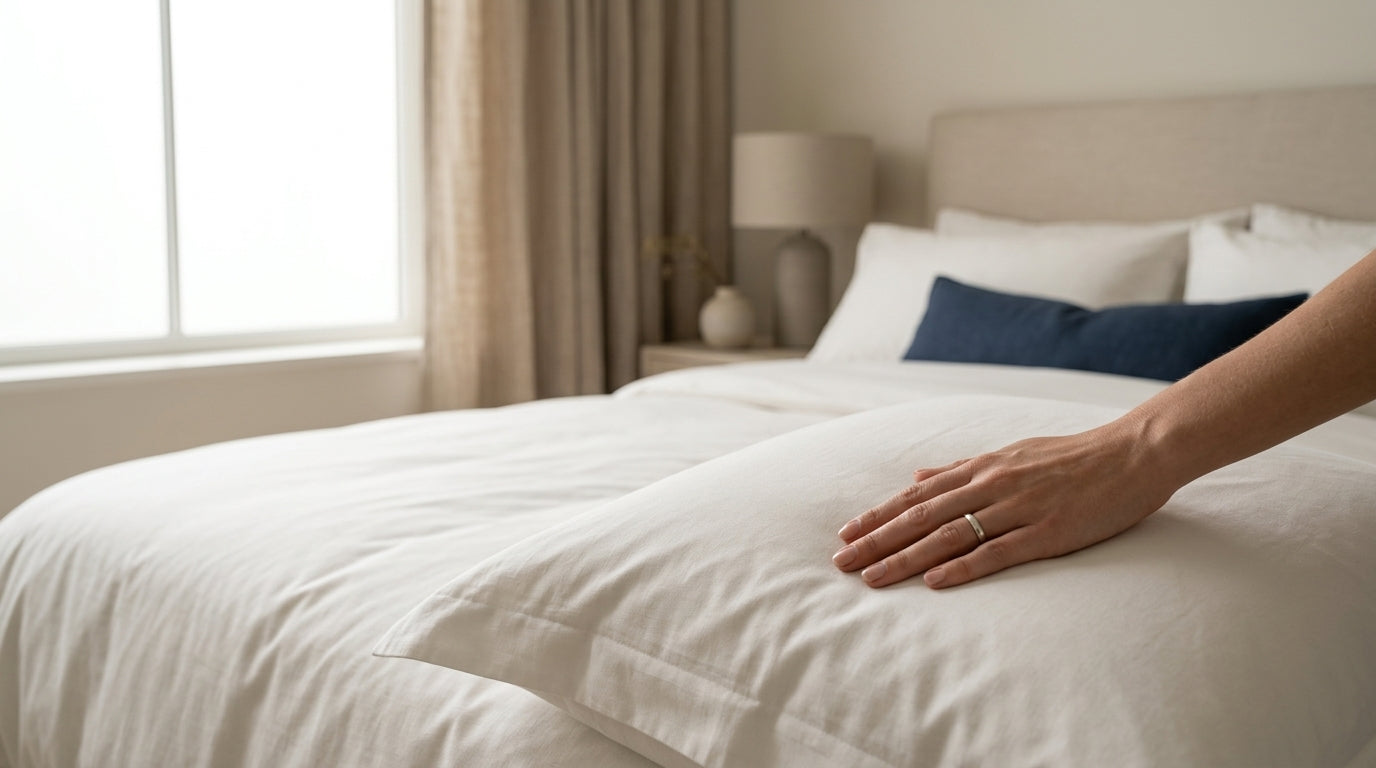
One effect surprises many buyers right after unpacking: new linen often feels firmer and somewhat coarser than expected from what they saw in the shop. This comes from the fibre structure, not from poor quality. With every wash the fibres soften and the fabric drapes more gently against the skin – a process that becomes clearly noticeable over the first ten to twenty washes.
What to look for when buying linen bedding
Weight in g/m²
The fabric weight indicates how much material is used per square metre, and it's the most reliable indicator of quality. Lightweight linen sits at around 120 to 160 g/m² and suits warm summer nights, as it drapes especially airily. Medium to heavy linen between 180 and 250 g/m² feels more substantial, has more drape, and many find it more comfortable for year-round use. A look at this figure on the product data sheet tells you more than the word "linen" alone on the label.
Weave and finishing
Pure linen fabric is usually woven in a plain weave – the simplest and, at the same time, the most durable weave. It's often additionally stonewashed or enzyme-washed: after weaving, the fabric goes through a mechanical or enzymatic washing process that makes it softer and less prone to wrinkling right from the start. Bedding with this noted in the description feels noticeably smoother straight after purchase than untreated linen.
Origin and fibre content
Check whether it's 100% linen or a linen-cotton blend. Blended fabrics are cheaper, softer to the touch initially and wrinkle less, but lose some of linen's typical properties, such as its high moisture absorption. Certifications like OEKO-TEX® Standard 100 confirm that the fabric has been tested for harmful substances – a sensible criterion regardless of fibre type.
European bed sizes at a glance
Bedding in Europe is offered in standardised measurements, which can vary slightly by country. The most common sizes in the German-speaking region are:
- Pillowcase: 80 × 80 cm (standard) or 40 × 80 cm
- Single duvet cover: 135 × 200 cm
- Double duvet cover: 155 × 220 cm or 200 × 200 cm
Anyone with a box-spring bed or a mattress of unusual height should also pay attention to the fitted sheet's corner depth, as this often needs to be larger for tall mattresses than for classic slatted-frame beds.
Linen, cotton or microfibre: what suits you?
The choice of material depends largely on personal sleeping habits. If you tend to overheat at night or sleep in a warmer bedroom, you'll benefit from linen's high moisture absorption and breathability. If you prefer an especially smooth, silky feel, cotton sateen is often the better fit. The overview below summarises the key differences.
Caring for linen bedding properly
Linen generally tolerates machine washing at 30 to 60 degrees; the exact figure is on the care label and should be followed. Linen should be taken out of the tumble dryer as early as possible and left to finish drying on a line – this reduces creasing and is gentler on the fibres. If you don't like the typical light creases, the best approach is to iron the fabric while it's still slightly damp, at a medium temperature. The tendency to crease isn't a flaw but a characteristic of the natural fibre, and can only be reduced, not fully avoided, through weave and pre-washing.
Detergents without bleach or fabric softener preserve the fibre structure best: fabric softener can reduce linen's natural absorbency over time.
Linen, cotton or microfibre compared
| Feature | Linen | Cotton (sateen/percale) | Microfibre |
|---|---|---|---|
| Breathability | very high | high | lower, retains heat |
| Moisture absorption | very high, dries quickly | high | low |
| Feel when new | firm, textured, softens with washing | smooth to silky | soft, consistent |
| Tendency to crease | high, part of the fibre's character | low to medium (depending on material) | very low |
| Care effort | medium, avoid fabric softener | low | very low |
| Durability | very high with proper care | high | medium |
Why Maison de Cocon
- Our linen bedding lists its fabric weight on the product data sheet, so you can gauge quality before you buy.
- All duvet covers and pillowcases are available in the common European sizes 135 × 200 cm, 155 × 220 cm and 200 × 200 cm, as well as 80 × 80 cm.
- The fabric is woven in a plain weave with a pre-washed finish for a softer feel from the very first use.
- Care instructions for every product are listed directly in the item description, not just on the sewn-in label.

Leave a comment
All comments are moderated before being published.
This site is protected by hCaptcha and the hCaptcha Privacy Policy and Terms of Service apply.