

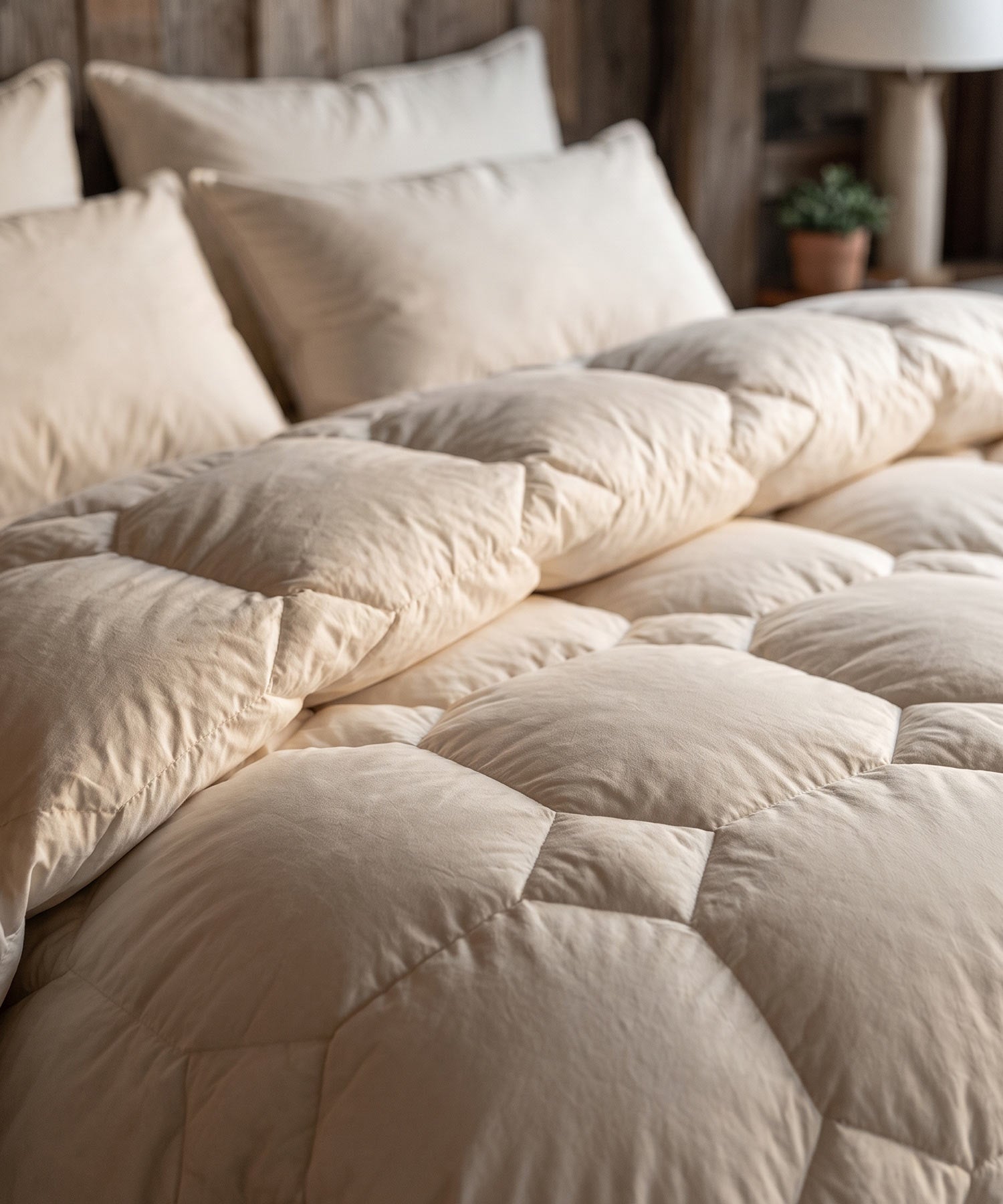
When buying a new duvet, most people face the same question: down or synthetic fill? Both have their merits, but they differ significantly in warmth, care, weight, and lifespan. Focus only on price, and you may overlook the added cost of replacing it more often. Focus only on natural materials, and you may underestimate the care involved. This comparison lays out what actually sets the two duvets apart, so you can decide based on concrete facts rather than gut feeling.
Two Fillings, Two Philosophies
A down duvet gets its warmth from fine, branched plumules from geese or ducks. These soft clusters form tiny air pockets that trap heat without adding much weight. A synthetic duvet works on a different principle: hollow polyester fibres are processed into a fleece that also traps air, but in a more even and denser structure. The distinction sounds technical, but it has a real effect day to day — on warmth, weight, and care.
Warmth and Breathability in Everyday Use
How warm a duvet feels depends largely on how much air can circulate within the fill. The open structure of down plumules lets moisture escape from the body, which is why down duvets store a lot of warmth despite their light weight. Synthetic fills are packed more densely: they warm just as reliably, but release moisture more slowly. On warm nights this can feel stuffier, while in cool bedrooms a dense synthetic duvet delivers a steady, even warmth.
Weight and Feel
A good down duvet feels fluffy and light at the same time — an effect textile experts call loft, or fill power. The higher the fill power, the more warmth you get from less filling. Synthetic duvets need more material to reach a comparable level of warmth, which makes them noticeably heavier on the body. Some sleepers find this weight pleasantly grounding, while others prefer the lightness of down.
Care: Washing, Drying, Storing
Synthetic duvets can usually be washed in a regular household washing machine without any trouble and dry considerably faster than down duvets. That makes them practical for households with children or pets. Down duvets need a gentle wash cycle at low spin speed and must be dried thoroughly afterwards so the fill doesn't clump together — special dryer balls help by fluffing up the plumules as they dry. If you don't have a large tumble dryer, it's worth planning for this extra care in advance.
Durability and Lifespan
With proper care, high-quality down duvets often last considerably longer than synthetic duvets — sometimes a decade or more. Synthetic fills lose loft after repeated washing over the years and can clump in places, which typically limits their lifespan to just a few years. Seen over the full period of use, the lower purchase price of a synthetic duvet is therefore only partly an advantage.
Allergies and Hygiene
Synthetic duvets are generally considered uncomplicated for house dust mite allergy sufferers, since they can be washed at higher temperatures, reliably reducing mites. Down duvets today are typically washed thoroughly and sterilised before being processed into a duvet, which has significantly reduced the allergy risk compared with past decades. Anyone who already reacts to feathers or down should still opt for a synthetic fill to be safe.
Origin and Sustainability
Down is an animal by-product, so its origin matters. Standards such as the Responsible Down Standard (RDS) rule out live-plucking and force-feeding and create traceability throughout the supply chain. Synthetic fills are made from petroleum-based polyester, though increasingly also from recycled polyester, which reduces the need for new raw material. Both fillings, then, carry an environmental dimension that goes beyond the choice of material alone.
Which Duvet Suits Whom?
If you value low weight, high breathability, and long lifespan, and are willing to accept the extra care involved, a down duvet is the right fit. If you're looking for a low-maintenance, washable, allergy-friendly option that fits easily into daily life, a synthetic duvet is the better choice. Some households opt for both — a lighter down duvet for summer and a warmer synthetic duvet for the cold season.
Down Duvet vs. Synthetic Duvet at a Glance
| Feature | Down Duvet | Synthetic Duvet |
|---|---|---|
| Warmth | High for very little weight | Good, but needs more fill material |
| Weight | Light and fluffy | Heavier for comparable warmth |
| Care | Gentle wash cycle, long drying time | Usually machine-washable, dries faster |
| Lifespan | Often a decade or longer | Typically a few years |
| Suitability for allergy sufferers | Usually well tolerated, check individually | Generally well suited |
| Origin/Material | Animal by-product, RDS standard possible | Polyester, sometimes recycled |
Why Maison de Cocon
- The Duvets & Pillows collection includes both down and synthetic duvets across several warmth classes.
- Every product lists the fill, cover fabric, and care instructions, so materials can be compared directly.
- Covers are made from cotton or cotton-blend fabric that supports the fill's air circulation.
- Our customer service team is happy to advise on the right warmth class before you buy.

Leave a comment
All comments are moderated before being published.
This site is protected by hCaptcha and the hCaptcha Privacy Policy and Terms of Service apply.